var _gaq = _gaq || []; _gaq.push(['_setAccount', 'UA-29250608-1']); _gaq.push(['_trackPageview']);
(function() { var ga = document.createElement('script'); ga.type = 'text/javascript'; ga.async = true; ga.src = ('https:' == document.location.protocol ? 'https://ssl' : 'http://www') + '.google-analytics.com/ga.js'; var s = document.getElementsByTagName('script')[0]; s.parentNode.insertBefore(ga, s); })();
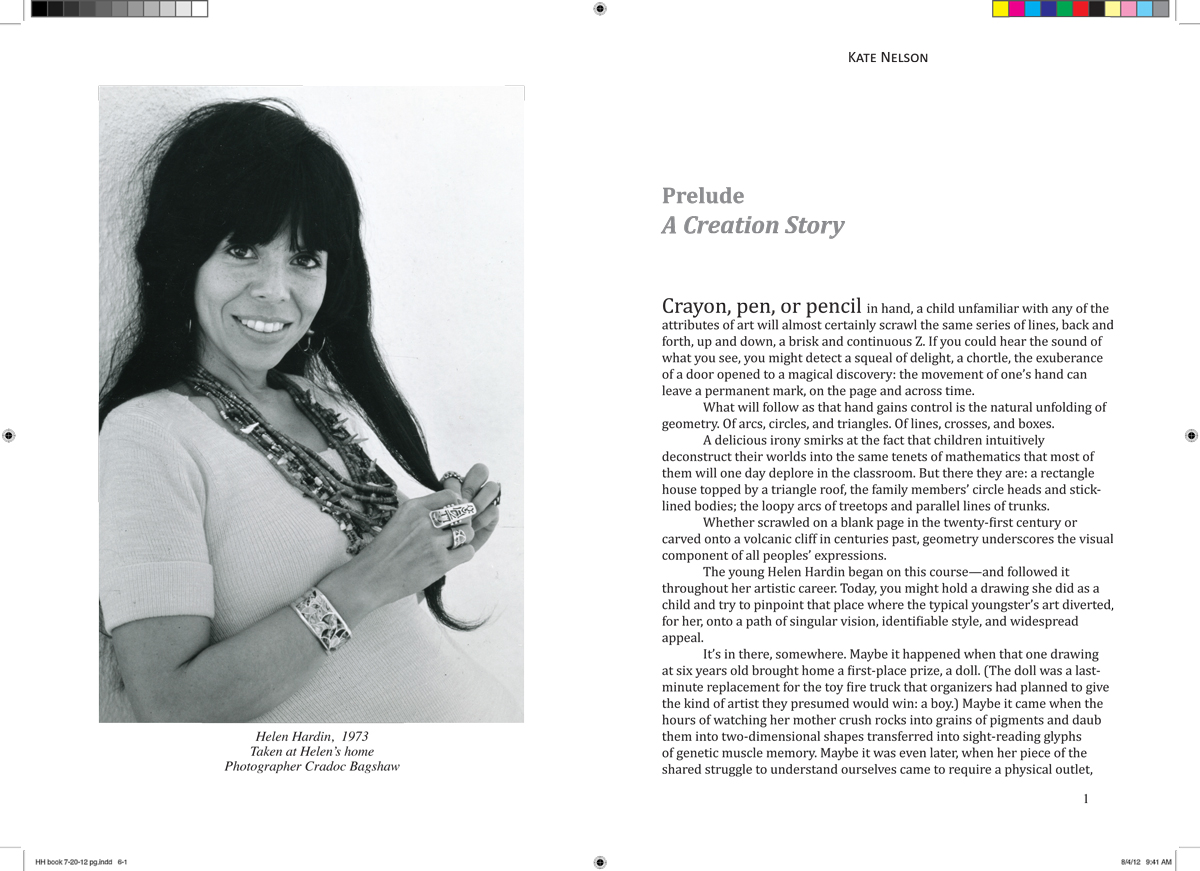
Helen Hardin (1943 – 1984) Tsa-sah-wee-eh, (Little Standing Spruce)
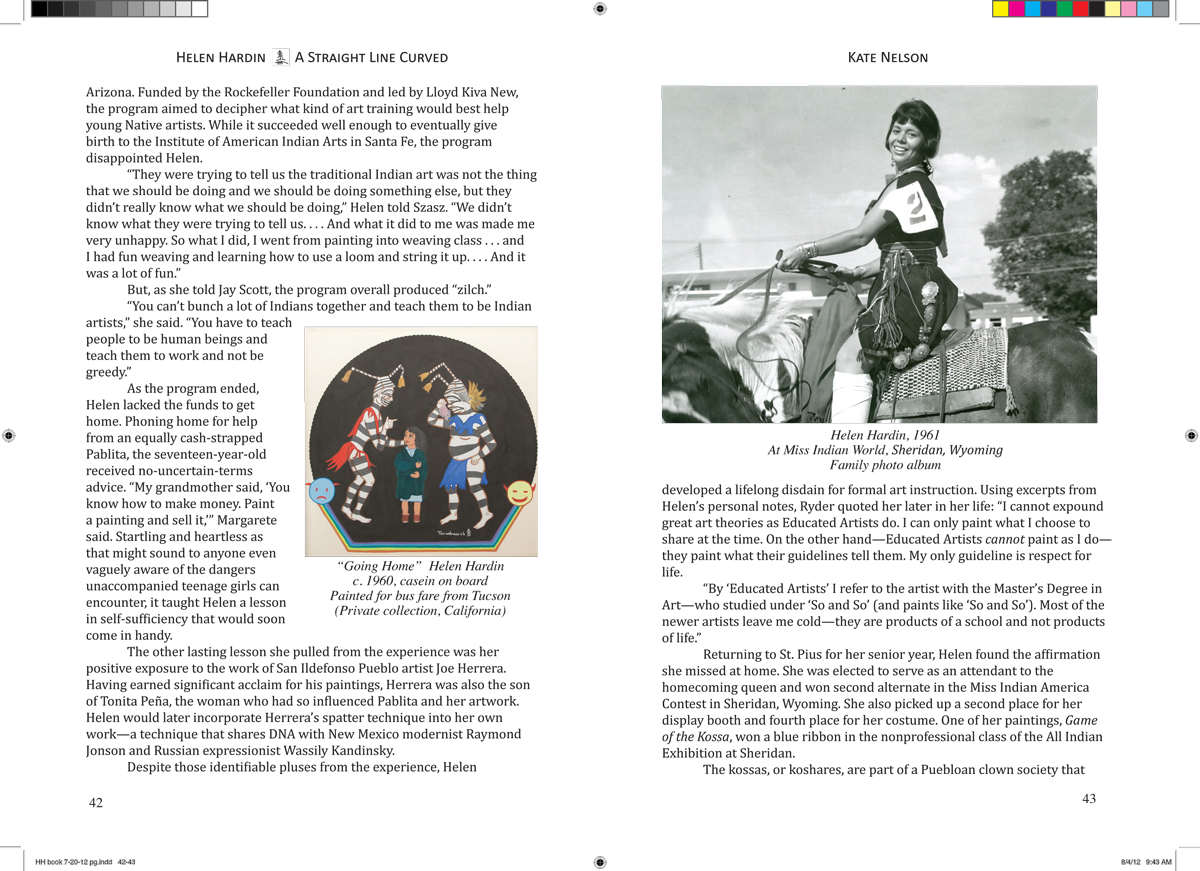
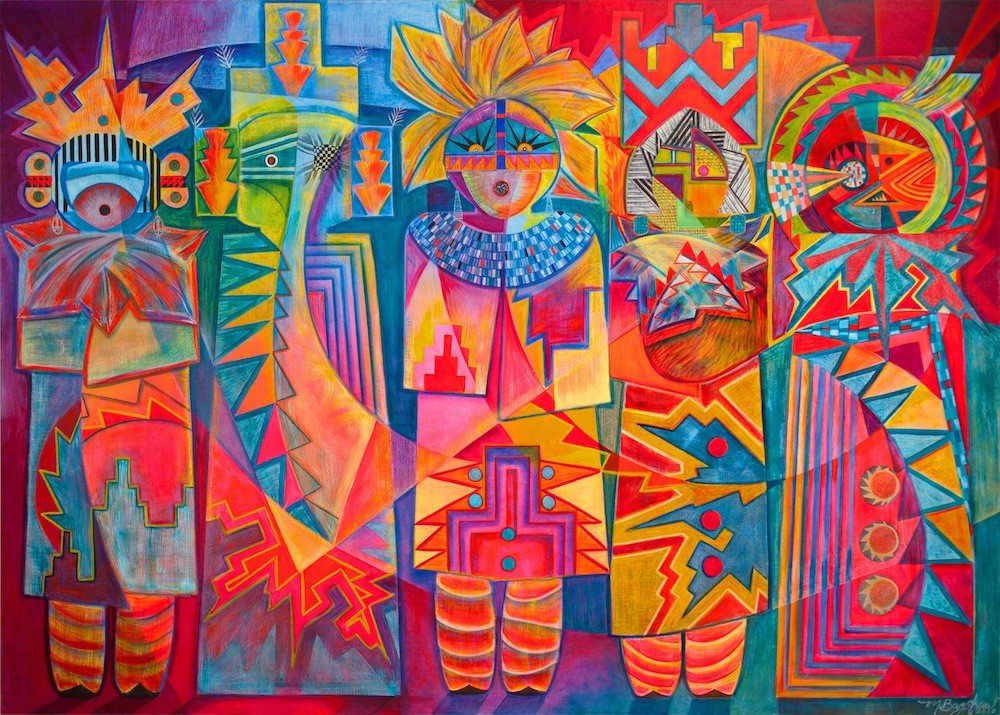
Helen Hardin, Pablita Velarde’s daughter, is acknowledged as the first Native female painter to move from traditional representational painting to abstract works. During her lifetime, she won almost as many awards as her mother. Establishing herself as a crossover artist, she was the lone female in the 1960’s vanguard of Native artists that included Fritz Scholder, Michael Kabotie, RC Gorman, Tony Da and Charles Loloma. In her short life (she died in 1983 at age 41 of breast cancer) she attained a level of acclaim achieved by few artists. In her last years, her work was selling more in New York and California than in her home state of New Mexico. Known for richly intricate detail and remarkable technical accuracy, her paintings and etchings today are selling for 60 to 70 times their original price. Her significant end period paintings—when available—are six figure masterpieces. Like her mother, Helen has a place in private and public Native collections throughout the world. In 2003, the Smithsonian established the “Helen Hardin Performance Theatre” in her honor at the Institute of American Indian Arts Museum in Santa Fe.
Photo: Cradoc Bagshaw